

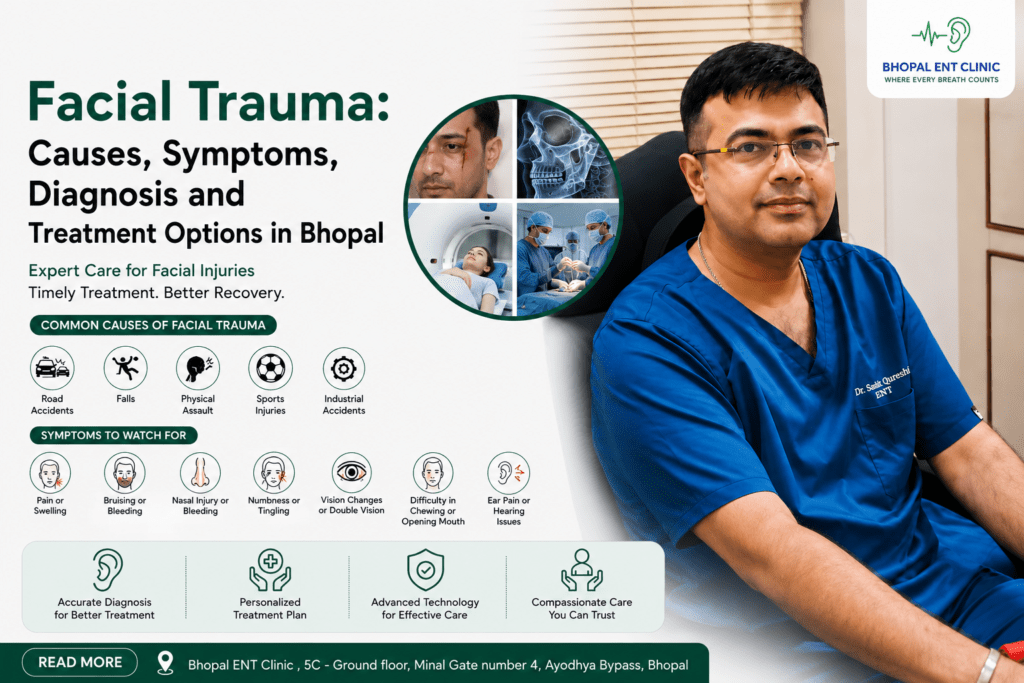
Facial Trauma Treatment in Bhopal can happen suddenly due to a road accident, fall, sports injury, physical impact or another unexpected event. Because the face contains important structures such as the eyes, nose, ears, jaw, teeth and airway, even an injury that appears minor from the outside may require careful medical evaluation.
Facial Trauma Treatment in Bhopal depends on the type and severity of the injury. Some injuries involve only bruising or cuts, while others may cause fractures of the nose, cheekbone, eye socket, jaw or other facial bones. In more serious trauma, associated head, neck, eye or airway injuries may also need to be assessed.
Early evaluation can help identify hidden fractures and other complications and can guide treatment according to the patient’s specific injury.
What Is Facial Trauma?
Facial trauma refers to an injury affecting the soft tissues, bones or important structures of the face.
It can involve one area or several areas at the same time. For example, an accident may injure the nose, cheek, eye socket, jaw and ear together.
Common facial injuries include:
- Facial cuts and lacerations
- Bruising and swelling
- Nose injuries and nasal fractures
- Cheekbone fractures
- Eye-socket or orbital fractures
- Upper-jaw or midface fractures
- Lower-jaw or mandibular fractures
- Dental and tooth-socket injuries
- Ear and temporal bone injuries
- Soft-tissue injuries
The appropriate Facial Trauma Treatment in Bhopal depends on which structures have been injured and whether there are associated complications.
What Causes Facial Trauma?
Facial trauma can occur from many different types of accidents and impacts.
Common causes include:
Road Traffic Accidents
Car, motorcycle and other road accidents are important causes of facial injuries. A high-impact accident can affect several facial structures at the same time.
Falls
Falls from stairs, rooftops, bicycles or other heights can cause injuries to the nose, jaw, cheekbones and eye region.
Sports Injuries
Contact sports and activities involving high-speed movement can result in facial impact, particularly when protective equipment is not used appropriately.
Physical Assault
A direct blow to the face can cause soft-tissue injury, nasal fracture, jaw fracture or other facial bone injuries.
Workplace or Industrial Accidents
Heavy objects, machinery-related incidents and other workplace accidents can cause significant facial trauma.
Animal-Related Injuries
Bites and other animal-related injuries can result in wounds, tissue damage and, in some situations, fractures.
What Are the Symptoms of Facial Trauma?
Symptoms depend on the location and severity of the injury.
Common symptoms can include:
- Facial pain
- Swelling
- Bruising
- Bleeding
- Cuts or open wounds
- Difficulty opening the mouth
- Changes in the way the teeth fit together
- Numbness of the face
- Difficulty breathing through the nose
- Nose deformity
- Double vision
- Blurred vision
- Hearing changes
- Dizziness
- Difficulty chewing
- Facial asymmetry
A jaw fracture, for example, can cause pain and swelling along with difficulty opening the mouth or a change in how the teeth come together. Midface fractures may cause facial swelling, numbness or double vision.
When Is Facial Trauma an Emergency?
Some facial injuries require immediate medical attention.
Seek emergency care if facial trauma is associated with:
- Difficulty breathing
- Severe or uncontrolled bleeding
- Loss of consciousness
- Confusion or unusual drowsiness
- Severe headache after significant trauma
- Sudden vision loss or major vision changes
- Severe eye injury
- Suspected jaw or facial fracture
- Significant facial deformity
- Repeated vomiting after a major impact
- Fluid or blood coming from the ear after significant head trauma
- Weakness or paralysis of part of the face
Major facial trauma can also occur alongside brain or cervical-spine injuries. Airway problems can develop because of bleeding, swelling or other injuries, so emergency assessment takes priority when breathing is compromised.
What Types of Facial Fractures Can Occur?
One of the important parts of Facial Trauma Treatment in Bhopal is identifying whether a facial bone has fractured.
Nasal Fracture
The nose is one of the most commonly injured facial structures. A fracture may cause pain, swelling, bleeding and a change in the shape of the nose.
Cheekbone Fracture
A fracture involving the cheekbone can cause swelling, facial asymmetry, numbness and sometimes difficulty opening the mouth.
Orbital Fracture
The orbit is the bony structure surrounding the eye. Trauma in this region can affect eye movement and may cause double vision or other visual symptoms.
Jaw Fracture
A mandibular fracture can cause pain, swelling, difficulty opening the mouth and changes in the alignment of the teeth.
Midface Fracture
More significant trauma can fracture the bones of the middle portion of the face, including the upper jaw and structures around the nose and eyes.
Temporal Bone Fracture
Severe trauma to the head can sometimes fracture the temporal bone, which contains important structures associated with the ear. Hearing loss, dizziness, facial weakness or bleeding from the ear may occur.
How Is Facial Trauma Diagnosed?
A detailed clinical examination is an important first step in Facial Trauma Treatment in Bhopal.
The doctor may examine:
- Facial swelling and wounds
- Bone tenderness
- Facial symmetry
- Eye movement and vision
- Nose structure
- Jaw movement
- Dental alignment
- Facial sensation
- Ear condition and hearing
- Facial nerve function
- Signs of associated head or neck injury
The exact investigations depend on the type of injury.
What Tests Are Used for Facial Trauma?
X-Ray
X-rays may be useful for evaluating selected facial and jaw injuries.
CT Scan
A CT scan provides detailed cross-sectional images of facial bones and is commonly used when a facial fracture is suspected.
Fine-cut CT is considered an important imaging method for evaluating facial fractures, while CT can also help identify injuries and bleeding associated with significant trauma.
Eye Examination
If the injury involves the area around the eye or the patient has visual symptoms, an eye examination may be required.
Hearing Assessment
Trauma involving the temporal bone or ear may require hearing assessment in addition to imaging.
What Are the Treatment Options for Facial Trauma?
The right Facial Trauma Treatment in Bhopal depends on whether the injury involves soft tissue, bone, the eye, ear, jaw or other structures.
Treatment of Minor Soft-Tissue Injuries
Small cuts, bruises and uncomplicated soft-tissue injuries may be managed with appropriate wound care, pain management and follow-up.
Treatment of Nasal Injuries
Depending on the injury, nasal trauma may require observation, treatment of bleeding, management of swelling or correction of a displaced fracture.
Treatment of Facial Fractures
Some fractures can be managed conservatively when the bones remain appropriately aligned and there are no significant functional or cosmetic problems.
More complicated fractures may require surgical treatment to realign and stabilize the bones.
Treatment of Jaw Fractures
Treatment may range from a soft or liquid diet and observation for selected minor injuries to surgical fixation for displaced or unstable fractures.
For some mandibular fractures, plates and screws may be used to stabilize the bone. In selected situations, temporary jaw immobilization may also be required.
Treatment of Ear-Related Trauma
When facial trauma involves the temporal bone or ear, treatment depends on problems such as hearing loss, balance disturbance, facial nerve injury or fluid leakage.
CT and hearing assessment may be required in these cases.
When Is Surgery Needed for Facial Trauma?
Not every facial injury requires surgery.
Surgery may be considered when there is:
- Significant facial deformity
- Displaced or unstable fracture
- Difficulty with jaw movement
- Abnormal bite alignment
- Problems with eye movement
- Persistent double vision related to the injury
- Significant functional impairment
- Severe structural damage
- Certain complex open injuries
The decision is based on the location of the fracture, its alignment, symptoms, functional problems and the overall condition of the patient.
Some midface fractures, for example, may be treated without surgery when they cause only pain and swelling and do not produce significant functional or structural problems.
What Should You Do Immediately After Facial Trauma?
If the injury is significant, medical evaluation should not be delayed.
Until professional help is available:
- Avoid unnecessary movement after major trauma.
- Control external bleeding with gentle pressure using clean material when appropriate.
- Do not try to force a visibly displaced facial bone back into position.
- Do not manipulate an injured eye.
- Avoid eating or drinking if urgent surgery may be required unless medical professionals advise otherwise.
- Seek emergency care when there is breathing difficulty, severe bleeding, loss of consciousness or suspected major fracture.
After major trauma, unnecessary movement can potentially worsen associated injuries, particularly when a head or neck injury has not been excluded.
What Happens During Facial Trauma Treatment?
The first priority in significant trauma is to make sure the patient’s basic functions, particularly breathing and circulation, are stable.
After that, the doctor evaluates the face and looks for injuries involving:
- Nose
- Mouth
- Jaw
- Eyes
- Ears
- Facial bones
- Soft tissues
- Facial nerves
Imaging may then be performed when required.
Once the complete injury has been understood, the doctor can decide whether observation, medication, wound care, fracture management or surgery is appropriate.
Recovery After Facial Trauma Treatment
Recovery depends on the type and severity of the injury.
Minor soft-tissue injuries may improve relatively quickly, while fractures can require a longer healing period.
During recovery, patients may be advised to:
- Follow wound-care instructions
- Take prescribed medicines correctly
- Follow dietary restrictions after jaw injury or surgery
- Avoid activities that could cause another facial impact
- Attend follow-up appointments
- Report worsening pain, swelling or other new symptoms
The recovery plan should be individualized because facial injuries can vary considerably from one patient to another.
Can Facial Trauma Cause Long-Term Problems?
Most patients with appropriately managed facial injuries can recover well, but some significant injuries may have longer-term effects.
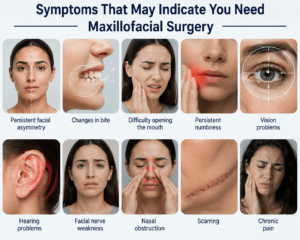
Possible complications can include:
- Persistent facial asymmetry
- Changes in bite
- Difficulty opening the mouth
- Persistent numbness
- Vision problems
- Hearing problems
- Facial nerve weakness
- Nasal obstruction
- Scarring
- Chronic pain
The possibility of complications depends on the location and severity of the original trauma and whether associated injuries occurred.
Why Is Specialist Evaluation Important?
Facial trauma can involve several structures at the same time. A patient may have a visible cut while also having an underlying fracture or injury affecting the eye, ear, jaw or airway.
This is why Facial Trauma Treatment in Bhopal should begin with a careful clinical evaluation rather than relying only on how the injury looks from the outside.
A specialist can determine which investigations are needed and whether the injury can be treated conservatively or requires a procedure.
Dr. Sadat Qureshi – ENT Specialist in Bhopal
Dr. Sadat Qureshi is an ENT Specialist, Otorhinolaryngologist, and Head and Neck Surgeon associated with Bhopal ENT Clinic.
According to the clinic information provided, he has 18 years of overall experience, including 16 years as a specialist. He completed his MBBS from Gandhi Medical College, Bhopal, in 2001 and MS in ENT from Rani Durgavati Vishwa Vidyalaya, Jabalpur, in 2006.
His areas of ENT and head-and-neck care include:
- Nasal endoscopy
- Sinusitis treatment
- Reconstructive middle-ear surgery
- Head and neck tumour/cancer surgery
- Laser surgeries for head and neck lesions
His experience in ENT and head-and-neck surgery can be relevant when facial trauma involves the nose, ear, airway or other structures within the head and neck region.
Dr. Shalini Jadia – ENT Specialist in Bhopal
Dr. Shalini Jadia is an ENT Specialist and Head and Neck Surgeon associated with Bhopal ENT Clinic.
The clinic information states that she completed her post-graduation in ENT and Head Neck Surgery in 2006 and has experience at institutions including Jaslok Hospital and Wadia Hospital in Mumbai.
She also has a fellowship in oncosurgery and serves as a Professor and Head of the Department at Peoples College of Medical Sciences & Research Center.
Her academic and clinical experience adds to the clinic’s multidisciplinary ENT and head-and-neck care.
Bhopal ENT Clinic for Facial Trauma Treatment in Bhopal
Bhopal ENT Clinic provides care for conditions involving the ear, nose and throat as well as head-and-neck problems.
The clinic is led by Dr. Sadat Qureshi and Dr. Shalini Jadia, both ENT specialists with experience in otorhinolaryngology and head-and-neck surgery.
For patients requiring Facial Trauma Treatment in Bhopal, appropriate specialist assessment can be especially important when an injury involves the nose, ear, airway, jaw or structures of the head and neck.
The clinic’s stated areas of expertise include nasal endoscopy, sinus treatment, reconstructive middle-ear surgery, head-and-neck tumour/cancer surgery and laser procedures for selected head-and-neck lesions.
Why Choose Bhopal ENT Clinic for Facial Trauma Treatment in Bhopal?
Choosing the appropriate specialist after facial trauma is important because different injuries may involve different structures.
Bhopal ENT Clinic focuses on:
Experienced ENT Specialists
The clinic is led by Dr. Sadat Qureshi and Dr. Shalini Jadia, who have extensive experience in ENT and head-and-neck care.
Comprehensive ENT Evaluation
The clinic provides evaluation and treatment for conditions affecting the ear, nose and throat, along with selected head-and-neck conditions.
Expertise in Several Treatments
Its listed services include nasal endoscopy, sinusitis treatment, reconstructive middle-ear surgery and head-and-neck surgical procedures.
Specialist-Based Care
Patients are evaluated according to their symptoms and the structures involved rather than following a single treatment approach for every injury.
Focus on Functional Care
When facial trauma affects areas such as the nose, ear or other head-and-neck structures, treatment may need to consider both healing and function.
When Should You See a Doctor for Facial Trauma?
You should consider prompt medical evaluation after facial trauma if you experience:
- Significant facial swelling
- Persistent or severe pain
- Facial deformity
- Nosebleed after a significant impact
- Difficulty breathing through the nose
- Difficulty opening your mouth
- A change in your bite
- Facial numbness
- Double vision or other visual changes
- Hearing loss
- Bleeding from the ear
- Facial weakness
- A deep or contaminated wound
If the trauma is severe or associated with breathing difficulty, loss of consciousness, uncontrolled bleeding or major neurological symptoms, emergency care is more appropriate than waiting for a routine appointment.
Summary
Facial Trauma Treatment in Bhopal covers the evaluation and management of injuries affecting the soft tissues, bones and important structures of the face.
Facial trauma can result from road accidents, falls, sports injuries, physical assault and workplace accidents. Symptoms may include pain, swelling, bleeding, bruising, facial deformity, difficulty opening the mouth, changes in bite, vision problems, hearing changes or numbness.
Diagnosis may involve a physical examination, X-rays, CT scans, eye assessment or hearing evaluation depending on the injury. CT imaging is particularly useful for assessing many facial fractures.
Treatment depends on the severity and location of the injury. Minor injuries may be managed conservatively, while displaced or complicated fractures may require surgical repair.
Frequently Asked Questions About Facial Trauma Treatment in Bhopal
What Is Facial Trauma Treatment in Bhopal?
Facial Trauma Treatment in Bhopal refers to the medical evaluation and management of injuries involving the facial bones, soft tissues, nose, jaw, eye region, ear and other head-and-neck structures.
What Are the Common Causes of Facial Trauma Treatment in Bhopal?
Facial trauma can occur because of road traffic accidents, falls, sports injuries, physical assault, workplace accidents and other high-impact events.
What Are the Common Symptoms of Facial Trauma?
Common symptoms include facial pain, swelling, bruising, bleeding, deformity, numbness, difficulty opening the mouth, changes in bite, visual problems and hearing changes.
Is a CT Scan Needed for Facial Trauma Treatment in Bhopal?
A CT scan may be recommended when a facial fracture or significant internal injury is suspected. It provides detailed images of facial bones and can help doctors understand the location and severity of an injury.
Does Facial Trauma Always Require Surgery?
No. Some facial injuries can be managed without surgery. Surgery may be considered when there is significant displacement, deformity, functional impairment or another problem that requires structural correction.
Can Facial Trauma Affect Vision?
Yes. Trauma around the eye socket can sometimes cause double vision, eye movement problems or other visual symptoms. Any significant change in vision after facial trauma should be evaluated promptly.
Can Facial Trauma Cause Hearing Loss?
Yes. Trauma involving the ear or temporal bone can cause hearing loss, dizziness or other ear-related symptoms. CT and hearing assessment may be required in such cases.
Can Jaw Fractures Be Treated Without Surgery?
Some uncomplicated fractures may be managed conservatively, while displaced or unstable fractures may require fixation or other treatment. The decision depends on the fracture pattern and functional problems.
When Should I Seek Emergency Facial Trauma Treatment in Bhopal?
Seek emergency care if facial trauma causes breathing difficulty, uncontrolled bleeding, loss of consciousness, major vision changes, severe facial deformity or other serious symptoms.
Where Can I Consult for Facial Trauma Treatment in Bhopal?
Bhopal ENT Clinic is led by Dr. Sadat Qureshi and Dr. Shalini Jadia and provides ENT and head-and-neck specialist care. Patients with facial trauma can be evaluated according to the structures involved and the severity of their injury.
Conclusion – Facial Trauma Treatment in Bhopal
Facial Trauma Treatment in Bhopal requires careful assessment because facial injuries can affect much more than the skin. A single accident can involve the nose, jaw, eye, ear, facial bones and surrounding soft tissues at the same time.
Recognizing symptoms such as facial deformity, severe swelling, changes in bite, numbness, vision problems, hearing loss or difficulty breathing is important. Significant trauma should be assessed promptly, particularly when there may be an associated head or neck injury.
At Bhopal ENT Clinic, Dr. Sadat Qureshi and Dr. Shalini Jadia provide ENT and head-and-neck specialist care. For patients with facial injuries involving ENT or head-and-neck structures, appropriate examination and diagnosis can help determine whether observation, medical management or a surgical approach is required.
