

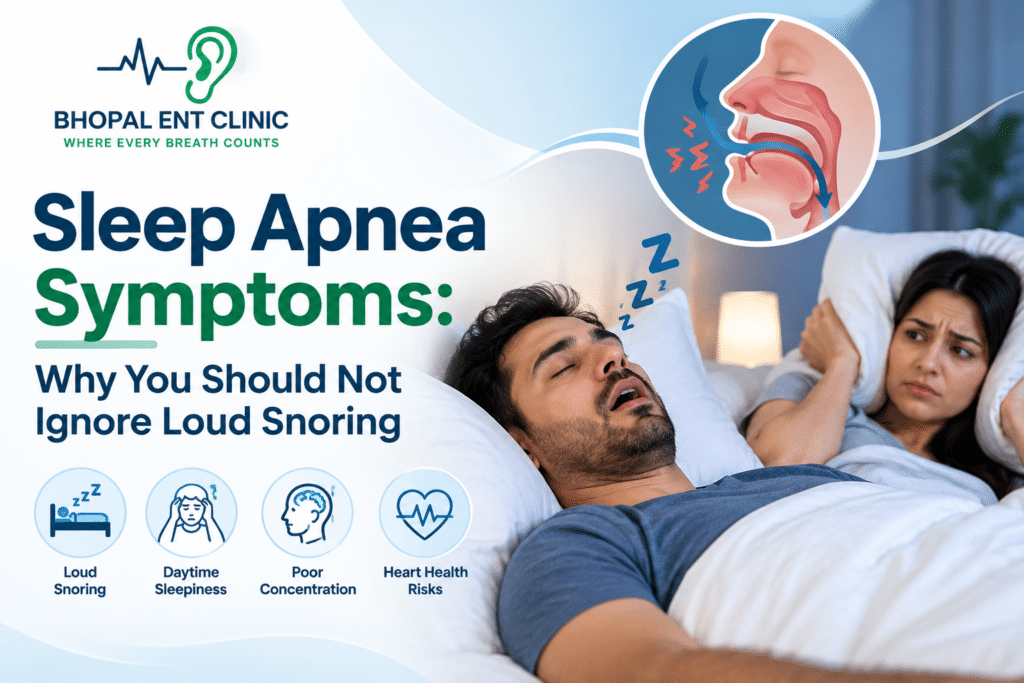
Loud snoring may seem like a harmless nighttime habit, but when it occurs regularly alongside breathing pauses, gasping, or daytime tiredness, it can signal a sleep-related breathing disorder. Recognising the warning signs early can help protect your sleep quality and overall health. People looking for Sleep apnea treatment in Bhopal should understand that snoring alone does not confirm a diagnosis, but persistent or unusual snoring deserves medical attention, particularly when someone notices interruptions in breathing.
At Bhopal ENT Clinic, TT Nagar, Bhopal, Dr. Sadat Qureshi and Dr. Shalini Jadia can assess ear, nose, and throat concerns that may contribute to snoring and breathing difficulties during sleep. Consulting an ENT specialist in Bhopal can be a useful step when nasal blockage, enlarged tonsils, or other upper-airway concerns may be involved. The right evaluation helps identify whether snoring is an isolated issue or a possible sign of sleep apnea requiring further investigation.
What Is Sleep Apnea?
Sleep apnea is a sleep-related condition in which breathing repeatedly stops or becomes shallow during sleep. These episodes can interrupt normal sleep and may affect oxygen levels in the body. The most common type is obstructive sleep apnea, which occurs when the upper airway narrows or becomes temporarily blocked during sleep. A person may not remember waking repeatedly, even when their sleep is significantly disturbed.
In obstructive sleep apnea, the muscles supporting the tongue and soft tissues at the back of the throat relax during sleep. If the airway becomes too narrow, air cannot flow normally. The brain may briefly trigger an awakening so breathing can resume. This cycle can happen repeatedly throughout the night, preventing restful sleep. People considering Sleep apnea treatment in MP Nagar should know that diagnosis depends on a clinical assessment and, when indicated, a sleep study—not simply on how loud someone snores.
A less common type, central sleep apnea, occurs when the brain does not send the usual signals that control breathing. Some people may have more than one type of sleep-related breathing problem. The symptoms can overlap, so it is important not to assume the cause without medical assessment. A clinician can consider the person’s symptoms, medical history, medicines, and test results before recommending a management plan.
Why You Should Not Ignore Loud Snoring
Snoring occurs when air moves past relaxed tissues in the nose, mouth, or throat, causing them to vibrate. Occasional snoring may happen because of nasal congestion, sleeping on the back, alcohol use, or temporary factors. However, frequent, very loud snoring—especially when followed by silence, gasping, or choking—may be a sign of obstructive sleep apnea.
Not everyone who snores has sleep apnea, and some people with sleep apnea may not snore noticeably. The combination of symptoms matters more than the sound alone. If your partner notices that you stop breathing for brief periods, or you regularly wake feeling unrefreshed despite spending enough time in bed, seek medical advice. An ENT specialist in Bhopal can assess potential nose and throat contributors and help determine whether further sleep evaluation is appropriate.
Untreated sleep apnea can contribute to persistent daytime sleepiness, difficulty concentrating, and mood changes. It is also associated with high blood pressure and an increased risk of certain cardiovascular and metabolic problems. These risks do not mean that every person who snores will develop complications. They do explain why recurring breathing interruptions should not be dismissed as merely an inconvenience for a sleeping partner.
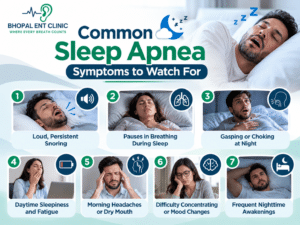
Common Sleep Apnea Symptoms to Watch For
Sleep apnea symptoms may appear during the night or the following day. Some signs are noticed by a bed partner, while others are experienced by the person affected. People exploring Sleep apnea treatment in Bhopal should note recurring symptoms and share them with a healthcare professional rather than relying on a checklist to self-diagnose.
1. Loud, Persistent Snoring
Regular, disruptive snoring can be an important warning sign, particularly if it varies in intensity or is interrupted by periods of silence. Snoring can also occur without sleep apnea, so it should be considered alongside other symptoms. If it has become frequent or is affecting sleep for you or your family, arrange a medical assessment.
2. Pauses in Breathing During Sleep
A bed partner may notice that breathing stops briefly, followed by a snort, gasp, or sudden breath. The person experiencing these pauses may not be aware of them. Observed breathing interruptions are a particularly important reason to seek evaluation. Do not wait for the person to feel exhausted before taking this sign seriously.
3. Gasping or Choking at Night
Some people wake suddenly feeling as though they need to catch their breath. They may snort, cough, or feel startled before falling asleep again. These episodes can be frightening and may occur repeatedly. If gasping or choking happens during sleep, discuss it with a clinician rather than assuming it is ordinary snoring.
4. Daytime Sleepiness and Fatigue
Disrupted sleep can leave a person tired even after spending many hours in bed. They may struggle to stay alert during meetings, reading, watching television, or routine activities. Persistent fatigue has several possible causes, but when it accompanies loud snoring or witnessed breathing pauses, sleep apnea should be considered by a healthcare professional.
5. Morning Headaches or Dry Mouth
Some people wake with a dry mouth, sore throat, or headache. Mouth breathing, nasal obstruction, dehydration, and other conditions can also cause these symptoms. Their presence does not prove sleep apnea, but recurring morning discomfort alongside snoring or daytime sleepiness can help a clinician understand the overall pattern.
6. Difficulty Concentrating or Mood Changes
Poor-quality sleep can affect attention, memory, patience, and emotional wellbeing. A person may feel irritable, mentally foggy, or less productive than usual. These symptoms are not specific to sleep apnea, but persistent changes deserve attention when they occur with other nighttime breathing symptoms.
7. Frequent Nighttime Awakenings
Repeated waking, restless sleep, or needing to urinate at night may occur in people with sleep apnea, although these symptoms can have other causes. Keep track of how often they happen and whether you also snore, gasp, or feel sleepy during the day. Sharing this information can make a medical consultation more useful.
What Causes Sleep Apnea?
Obstructive sleep apnea usually develops when the upper airway narrows or closes during sleep. Several factors can increase the likelihood of this happening, but no single factor explains every case. A person can have sleep apnea without being overweight, and the condition can affect adults of different ages.
Airway Structure and Nasal Problems
The size and shape of the airway, jaw, tongue, soft palate, and tonsils can influence airflow during sleep. Nasal congestion or a deviated nasal septum may make breathing through the nose difficult and contribute to snoring. An ENT specialist in Bhopal can examine the nose and throat to identify structural or inflammatory issues that may need attention. At Bhopal ENT Clinic, patients can discuss these concerns with Dr. Sadat Qureshi and Dr. Shalini Jadia. Treating nasal obstruction may improve nasal breathing, but it does not automatically resolve sleep apnea.
Weight and Neck Circumference
Excess tissue around the neck and upper airway can increase the likelihood of airway narrowing in some people. However, weight is only one factor among many. Sleep apnea can affect people with different body types, so symptoms should not be ignored because someone appears healthy or is not overweight.
Sleeping Position and Alcohol
For some people, sleeping on the back makes snoring or airway obstruction worse because gravity affects the position of the tongue and soft tissues. Alcohol and sedating medicines can also affect airway muscle tone or alertness. Do not stop prescribed medicines without advice; instead, discuss any possible effects with the prescribing clinician.
Age, Family History, and Other Health Factors
The likelihood of sleep apnea may increase with age, and family history or anatomical characteristics can also play a role. Certain medical conditions and medications may influence sleep and breathing. Because causes differ between individuals, an assessment should consider the whole health picture rather than focusing on one risk factor.
How Is Sleep Apnea Diagnosed?
A clinician usually begins by asking about snoring, breathing pauses, gasping, daytime sleepiness, sleep habits, and relevant medical history. They may ask whether a partner has observed changes in breathing. A physical examination may include the nose, mouth, throat, jaw, and neck. These steps help estimate the possibility of sleep apnea, but symptoms and examination alone cannot always confirm the condition. Dr. Sadat Qureshi and Dr. Shalini Jadia can discuss the symptoms and explain whether further sleep evaluation may be appropriate at the clinic.
A sleep study may be recommended to measure breathing and other body functions during sleep. Depending on the situation, testing may be performed at home with a suitable device or in a sleep laboratory. The appropriate option depends on the person’s health, symptoms, and the clinician’s assessment. People seeking Sleep apnea treatment in MP Nagar should understand that the test is important because it helps establish whether sleep apnea is present and how severe it may be.
Sleep studies may measure airflow, breathing effort, oxygen levels, heart rate, and other signals. Results help clinicians distinguish sleep apnea from other causes of disturbed sleep and guide treatment decisions. If a home test is negative or inconclusive despite strong suspicion, additional testing may be needed. Do not interpret a consumer smartwatch or phone recording as a definitive diagnosis.
Treatment Options for Sleep Apnea
Treatment depends on the type and severity of sleep apnea, the person’s symptoms, anatomy, medical history, and preferences. A treatment that helps one person may not be appropriate for another. The purpose is to improve breathing during sleep, reduce symptoms, and address relevant health risks. People considering Sleep apnea treatment in Bhopal should discuss their test results and treatment choices with a qualified healthcare professional.
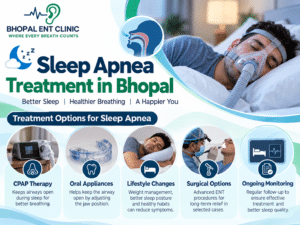
Positive Airway Pressure Therapy
Positive airway pressure, commonly called PAP, is a widely used treatment for obstructive sleep apnea. A machine delivers air through a mask to help keep the airway open during sleep. Continuous positive airway pressure, or CPAP, provides a set pressure, while other devices may adjust pressure according to the person’s needs.
Some people need time to become comfortable with the mask or machine. Dryness, congestion, mask leakage, or discomfort can sometimes occur, but equipment adjustments and clinical guidance may help. If therapy is difficult to tolerate, contact the treating team rather than abandoning it without discussing alternatives.
Oral Appliances
A custom-fitted oral appliance may be suitable for selected people, particularly some patients with mild to moderate obstructive sleep apnea or those who cannot tolerate PAP therapy. Certain devices move the lower jaw forward to help maintain space in the airway. Assessment and fitting by appropriately trained dental professionals are important, and follow-up may be needed to check comfort and effectiveness.
Lifestyle Measures
Lifestyle changes can support treatment and may reduce symptoms for some people. Depending on individual circumstances, these may include regular physical activity, weight management when appropriate, avoiding alcohol close to bedtime, stopping smoking, and maintaining a consistent sleep schedule. Sleeping on the side may help people whose symptoms worsen when lying on their backs. These steps should complement, not replace, prescribed treatment when sleep apnea requires it.
Surgery and Other Treatments
In selected cases, surgery may be considered when specific anatomical factors contribute to airway obstruction or when other treatments are unsuitable or unsuccessful. The procedure depends on the location and nature of the problem. Surgery is not automatically necessary for loud snoring, and it cannot be guaranteed to cure sleep apnea. A specialist should explain likely benefits, limitations, risks, and alternatives before any procedure.
How an ENT Assessment Can Help
An ear, nose, and throat assessment can be useful when snoring may be related to nasal blockage, enlarged tonsils, throat anatomy, or other upper-airway concerns. An ENT specialist in Bhopal can examine these structures, review symptoms, and advise whether additional evaluation or referral for sleep testing is appropriate. An ENT examination is one part of the assessment; it does not replace a sleep study when one is required. At Bhopal ENT Clinic, Dr. Sadat Qureshi and Dr. Shalini Jadia can help patients understand the next steps based on their symptoms.
At Bhopal ENT Clinic, TT Nagar, Bhopal, Madhya Pradesh 462001, Dr. Sadat Qureshi and Dr. Shalini Jadia can assess relevant ear, nose, and throat concerns. The consultation should include a discussion of the symptoms, how long they have been occurring, and whether anyone has noticed breathing pauses during sleep. Depending on the findings, further testing or coordination with another healthcare professional may be recommended.
When Should You Seek Medical Advice?
Arrange a medical consultation if snoring is frequent or disruptive, someone observes breathing pauses, you wake gasping or choking, or you regularly feel excessively sleepy during the day. Persistent morning headaches, difficulty concentrating, and unrefreshing sleep are also worth discussing, particularly when several symptoms occur together. People researching Sleep apnea treatment in MP Nagar should not delay assessment simply because they do not remember waking during the night.
Daytime sleepiness can create safety concerns. If you are struggling to stay awake, avoid driving or operating machinery until you can do so safely and have sought appropriate advice. Seek urgent medical help for severe or sudden breathing difficulty while awake, chest pain, fainting, or other acute symptoms that may indicate an emergency. These symptoms should not be attributed to sleep apnea without assessment.
How to Prepare for Your Appointment
A few simple preparations can make a consultation more productive. Write down how often you snore, when symptoms began, whether you wake during the night, and how rested you feel in the morning. If a partner has noticed pauses in breathing or gasping, ask them to describe what they have observed. This information can help your clinician decide what evaluation is appropriate. Patients visiting Bhopal ENT Clinic can share these observations with Dr. Sadat Qureshi and Dr. Shalini Jadia during a consultation.
Bring a list of medicines and supplements you use, along with details of relevant health conditions and previous sleep tests. Tell the clinician if you have nasal blockage, allergies, or difficulty breathing through your nose. If you are considering Sleep apnea treatment in Bhopal, ask what tests may be needed, what each treatment involves, how progress will be monitored, and when you should follow up.
Can Loud Snoring Be Prevented?
Not all snoring can be prevented, because some causes relate to airway anatomy or underlying sleep disorders. However, practical measures may help reduce snoring for some people. Maintaining a regular sleep routine, avoiding alcohol close to bedtime, sleeping on your side if advised, and addressing persistent nasal symptoms may be useful. If weight management is relevant, seek realistic guidance rather than relying on extreme diets.
Avoid self-prescribing sleeping pills or using unverified devices that claim to cure sleep apnea. Medicines that cause sedation can affect breathing or alertness in some circumstances, so discuss concerns with a healthcare professional. If snoring persists despite lifestyle measures, or if you notice gasping, breathing pauses, or daytime sleepiness, arrange an assessment rather than continuing home remedies alone.
Frequently Asked Questions – Sleep apnea treatment in Bhopal
1. When should I consider Sleep apnea treatment in Bhopal for loud snoring?
Consider medical evaluation if loud snoring is frequent, disrupts sleep, or occurs alongside gasping, witnessed breathing pauses, or daytime sleepiness. A clinician can assess your symptoms and decide whether a sleep study is needed. Snoring alone does not confirm sleep apnea.
2. Can an ENT specialist in Bhopal help identify the cause of snoring?
Yes. An ENT assessment can identify nasal obstruction, enlarged tonsils, or other upper-airway concerns that may contribute to snoring. If sleep apnea is suspected, further evaluation or a sleep study may be necessary to confirm the diagnosis.
3. Is Sleep apnea treatment in MP Nagar necessary if I do not feel tired?
Not everyone with sleep apnea notices obvious daytime tiredness. Some people may have witnessed breathing pauses, restless sleep, or other symptoms. If a bed partner observes repeated pauses or gasping, seek medical advice even if you feel reasonably alert during the day.
4. Does every person who snores have sleep apnea treatment in Bhopal needs?
No. Snoring can occur without sleep apnea and may be related to sleep position, alcohol, nasal congestion, or airway anatomy. A clinician can evaluate the pattern of symptoms and decide whether further testing is appropriate.
5. What tests may an ENT specialist in Bhopal recommend for suspected sleep apnea?
The clinician may review your history, examine your nose and throat, and recommend a sleep study if indicated. Depending on your circumstances, the study may be performed at home or in a sleep laboratory. The results help establish whether sleep apnea is present and how severe it is.
6. Can lifestyle changes replace Sleep apnea treatment in MP Nagar?
Lifestyle measures can help some people, but they do not replace prescribed treatment for everyone. The right approach depends on the severity and type of sleep apnea. Discuss any proposed changes with your clinician, especially if you have already been prescribed a breathing device.
7. Is CPAP always required for Sleep apnea treatment in Bhopal?
No. CPAP is a common treatment, but the most appropriate option depends on the diagnosis, severity, anatomy, and individual needs. Some people may be suitable for an oral appliance or other treatment. A healthcare professional can explain the options based on your test results.
8. When should I visit an ENT specialist in Bhopal for nasal blockage and snoring?
Seek an assessment if nasal blockage or snoring persists, affects sleep, or occurs with gasping or witnessed breathing pauses. An ENT examination can look for nasal or throat problems, while suspected sleep apnea may require a separate sleep study.
9. Can children need Sleep apnea treatment in MP Nagar?
Children can develop sleep-disordered breathing, and symptoms may include snoring, pauses in breathing, restless sleep, or attention and behaviour difficulties. Persistent snoring in a child should be discussed with a healthcare professional. Evaluation and treatment depend on the child’s age and the cause of the symptoms.
10. What should I bring to a Sleep apnea treatment in Bhopal consultation?
Bring a list of symptoms, medicines, relevant medical conditions, and any previous sleep-test results. If possible, note what a bed partner has observed, including pauses in breathing or gasping. Ask about diagnosis, treatment choices, follow-up, and how to monitor whether the plan is working.
Conclusion: Take Loud Snoring Seriously
Loud snoring is common, but persistent snoring accompanied by pauses in breathing, choking, morning headaches, or daytime tiredness may indicate a sleep-related breathing disorder. Sleep apnea can affect sleep quality and overall health, and it is not possible to diagnose it from snoring alone. Recognising patterns, involving a bed partner when appropriate, and seeking medical advice can help people get the right evaluation.
If you are concerned about snoring or other nighttime breathing symptoms, consider an assessment with Dr. Sadat Qureshi and Dr. Shalini Jadia at Bhopal ENT Clinic, TT Nagar, Bhopal, Madhya Pradesh 462001. An ENT specialist in Bhopal can assess relevant upper-airway concerns and advise on appropriate next steps. Dr. Sadat Qureshi and Dr. Shalini Jadia at Bhopal ENT Clinic can discuss the symptoms and whether further evaluation is needed. With a suitable diagnosis and individualised care, many people can manage sleep apnea symptoms and improve their quality of rest.
