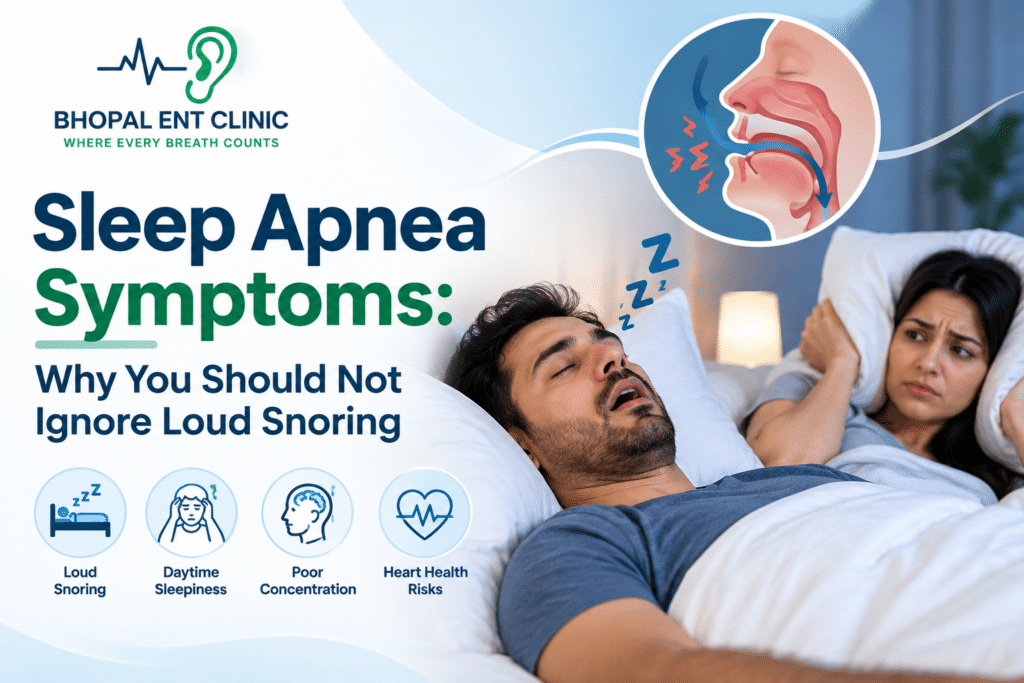
Sleep Apnea Symptoms: Why You Should Not Ignore Loud Snoring
Loud snoring may seem like a harmless nighttime habit, but when it occurs regularly alongside breathing pauses, gasping, or daytime tiredness, it can signal a sleep-related breathing disorder. Recognising the warning signs early can help protect your sleep quality and overall health. People looking for Sleep apnea treatment in Bhopal should understand that snoring alone does not confirm a diagnosis, but persistent or unusual snoring deserves medical attention, particularly when someone notices interruptions in breathing. At Bhopal ENT Clinic, TT Nagar, Bhopal, Dr. Sadat Qureshi and Dr. Shalini Jadia can assess ear, nose, and throat concerns that may contribute to snoring and breathing difficulties during sleep. Consulting an ENT specialist in Bhopal can be a useful step when nasal blockage, enlarged tonsils, or other upper-airway concerns may be involved. The right evaluation helps identify whether snoring is an isolated issue or a possible sign of sleep apnea requiring further investigation. What Is Sleep Apnea? Sleep apnea is a sleep-related condition in which breathing repeatedly stops or becomes shallow during sleep. These episodes can interrupt normal sleep and may affect oxygen levels in the body. The most common type is obstructive sleep apnea, which occurs when the upper airway narrows or becomes temporarily blocked during sleep. A person may not remember waking repeatedly, even when their sleep is significantly disturbed. In obstructive sleep apnea, the muscles supporting the tongue and soft tissues at the back of the throat relax during sleep. If the airway becomes too narrow, air cannot flow normally. The brain may briefly trigger an awakening so breathing can resume. This cycle can happen repeatedly throughout the night, preventing restful sleep. People considering Sleep apnea treatment in MP Nagar should know that diagnosis depends on a clinical assessment and, when indicated, a sleep study—not simply on how loud someone snores. A less common type, central sleep apnea, occurs when the brain does not send the usual signals that control breathing. Some people may have more than one type of sleep-related breathing problem. The symptoms can overlap, so it is important not to assume the cause without medical assessment. A clinician can consider the person’s symptoms, medical history, medicines, and test results before recommending a management plan. Why You Should Not Ignore Loud Snoring Snoring occurs when air moves past relaxed tissues in the nose, mouth, or throat, causing them to vibrate. Occasional snoring may happen because of nasal congestion, sleeping on the back, alcohol use, or temporary factors. However, frequent, very loud snoring—especially when followed by silence, gasping, or choking—may be a sign of obstructive sleep apnea. Not everyone who snores has sleep apnea, and some people with sleep apnea may not snore noticeably. The combination of symptoms matters more than the sound alone. If your partner notices that you stop breathing for brief periods, or you regularly wake feeling unrefreshed despite spending enough time in bed, seek medical advice. An ENT specialist in Bhopal can assess potential nose and throat contributors and help determine whether further sleep evaluation is appropriate. Untreated sleep apnea can contribute to persistent daytime sleepiness, difficulty concentrating, and mood changes. It is also associated with high blood pressure and an increased risk of certain cardiovascular and metabolic problems. These risks do not mean that every person who snores will develop complications. They do explain why recurring breathing interruptions should not be dismissed as merely an inconvenience for a sleeping partner. Common Sleep Apnea Symptoms to Watch For Sleep apnea symptoms may appear during the night or the following day. Some signs are noticed by a bed partner, while others are experienced by the person affected. People exploring Sleep apnea treatment in Bhopal should note recurring symptoms and share them with a healthcare professional rather than relying on a checklist to self-diagnose. 1. Loud, Persistent Snoring Regular, disruptive snoring can be an important warning sign, particularly if it varies in intensity or is interrupted by periods of silence. Snoring can also occur without sleep apnea, so it should be considered alongside other symptoms. If it has become frequent or is affecting sleep for you or your family, arrange a medical assessment. 2. Pauses in Breathing During Sleep A bed partner may notice that breathing stops briefly, followed by a snort, gasp, or sudden breath. The person experiencing these pauses may not be aware of them. Observed breathing interruptions are a particularly important reason to seek evaluation. Do not wait for the person to feel exhausted before taking this sign seriously. 3. Gasping or Choking at Night Some people wake suddenly feeling as though they need to catch their breath. They may snort, cough, or feel startled before falling asleep again. These episodes can be frightening and may occur repeatedly. If gasping or choking happens during sleep, discuss it with a clinician rather than assuming it is ordinary snoring. 4. Daytime Sleepiness and Fatigue Disrupted sleep can leave a person tired even after spending many hours in bed. They may struggle to stay alert during meetings, reading, watching television, or routine activities. Persistent fatigue has several possible causes, but when it accompanies loud snoring or witnessed breathing pauses, sleep apnea should be considered by a healthcare professional. 5. Morning Headaches or Dry Mouth Some people wake with a dry mouth, sore throat, or headache. Mouth breathing, nasal obstruction, dehydration, and other conditions can also cause these symptoms. Their presence does not prove sleep apnea, but recurring morning discomfort alongside snoring or daytime sleepiness can help a clinician understand the overall pattern. 6. Difficulty Concentrating or Mood Changes Poor-quality sleep can affect attention, memory, patience, and emotional wellbeing. A person may feel irritable, mentally foggy, or less productive than usual. These symptoms are not specific to sleep apnea, but persistent changes deserve attention when they occur with other nighttime breathing symptoms. 7. Frequent Nighttime Awakenings Repeated waking, restless sleep, or needing to urinate at night may occur in people with sleep apnea, although these symptoms can have other causes. Keep track of how often they happen